domingo, 21 de mayo de 2023

CLOAK


Origen: E.E.U.U., Atlanta

Formados: 2013

Estilo: Black, gótico

Temática: Lo desconocido, espiritualismo, muerte y oscuridad

Enlaces: Bandcamp y facebook

Miembros:

  • Billy Robinson Bajo
  • Max Brigham Guitarra
  • Scott Taysom Guitarra y voces
  • Sean Bruneau Batería
Discografía:

  • Demo '15 Demo 2015  
  • Cloak EP 2016  
  • To Venomous Depths CD 2017
  • London Dungeon Single 2018  
  • 2 Hits from Hell EP 2019  
  • The Burning Dawn CD 2019
  • Invictus Single 2023  
  • Seven Thunders Single 2023  
  • The Holy Dark Single 2023  
  • Black Flame Eternal CD 2023

BLACK FLAME ETERNAL (2023)
Tercera entrega para estos muchachos de Atlanta, un nuevo trabajo con un sonido mas marcado en su faceta black/heavy y que viene a dejarnos más claro si cabe lo ecléctico del paisaje black estadounidense, en un álbum que nos remite esta vez al sonido black escandinavo más claramente. Un trabajo que destaca por un ritmo, en general, bastante elevado con algunas variaciones en cuanto a intensidad que van salpicando el conjunto, que sirven para poder desarrollar algunas atmosferas más oscuras y emotivas. El trabajo de guitarras se muestra soberbio en diferentes aspectos, por un lado tenemos una ejecución de riffs endiablada, perfectamente sincronizados con el alto ritmo impuesto en las composiciones, podemos hablar también de un carácter melódico que trasciende a todo el conjunto, en mayor o menor medida presente, ofreciendo siempre un tono rugoso y sin pulir y por último no podemos olvidarnos de las influencias heavy que salpican los fraseados de guitarra. Por su parte las voces adquieren un carácter también bastante clásico, tanto si hablamos de black directo y crudo con una fuerte carga de oscuridad y espiritualismo, como por sus influencias del heavy que trascienden en algunas partes. Estamos ante un álbum de sonido mayúsculo, potente y preciso en muchas secciones, con claros referentes en el black escandinavo, capaz de que aa violencia y agresividad conviva perfectamente con un aura melódica, sin que por ello se pierda ese tono oscuro que rodea a todas las composiciones. (8).


1. Ethereal Fire 05:37  
2. With Fury and Allegiance 04:46  
3. Shadowlands 05:58  
4. Invictus 06:36  
5. Seven Thunders 05:49  
6. Eye of the Abyss 05:06  
7. The Holy Dark 06:03  
8. Heavenless 02:57  
9. Black Flame Eternal 06:43  
  49:35


Vinyl, 12", 33 ⅓ RPM, EP, Limited Edition, Reissue


sábado, 20 de mayo de 2023

D.R.E.P.


Origen: Holanda

Formados: 2022

Estilo: Black

Temática: Colapso y urbanismo

Enlaces: Facebook e instagram

Miembros: 

  • Deportator Batería, teclados y voces
  • Havoque Bajo, guitarra y voces
  • Kombustar Voces
Discografía:

  • Promo 2022 Demo 2022  
  • Drastically Reducing Earth's Population CD 2023

DRASTICALLY REDUCING EARTH´S POPULATION (2023)
En activo desde finales de 1998, pero sin que hayan editado ningún material hasta la fecha salvo algún que otro amago en forma de compartido, colaboración o recopilatorio, sin la oficialidad demandada. Un álbum de sonido poderoso, en definitiva, en donde la batería programada juega un papel fundamental a la hora de poder describir el sonido del álbum como de black industrial, sin embargo el sonido no está del todo pulido y ofrece muchas secciones rugosas, áridas y crudas. Sobre todo hay que destacar el sonido de los tres primeros temas, temas que por otra parta pertenecen a la etapa en la que se formo la banda y donde el ritmo es alto, el sonido poderoso, marcado por un sonido de batería agresivo y violento que impone un paso casi que marcial, ofreciendo ese sonido de black industrial que de alguna forma logra ofrecer un tono lodoso y profundo, con cierta crudeza. Las parte final del álbum se abre a ciertos elementos más dinámicos, manteniendo por un lado la alto tono de batería, pero ganando espacio algunas atmosferas, mayor presencia del sonido de guitarra y un carácter más dinámico, sin perder de vista en ningún momento la esencia del sonido clásico, oscuro y pesado. Las voces adquieren un protagonismo destable, los tres integrantes de la banda se las arreglan para escupir sus arengas, cada uno con un carácter personal, sin perder de vista tanto un tono clásico, como brutal y directo. Un álbum con una carácter misantrópico y nihilista que acaba por trascender al conjunto, manteniendo siempre ese carácter de sonido black industrial clásico, como si el tiempo se hubiera detenido y regresáramos a finales de la década de los noventa. (7,7).


1. Wereldreinheid 04:00  
2. Mensendamp 04:39  
3. Beenderendans 02:19  
4. Karkassenkoets 03:28  
5. Aardelating 05:53  
6. Nedergang 05:32  
  25:51


viernes, 19 de mayo de 2023

THULCANDRA

 HAIL THE ABYSS (2023)

Quinta entrega para las huestes de Steffen Kummerer, que de alguna manera, desde el inicial "Fallen Angel's Dominion (2010)", se ha asentado con fuerza en una posición de sonidos oscuros, fríos y poderosos en donde el black y el death melódicos se afianzan como sonidos de referencia. Con pequeñas variaciones con respecto a pasados lanzamientos, quizás algunas pinceladas de mayor crudeza en ciertas secciones o un mayor dinamismo en algunas estructuras, pero en líneas generales el álbum continua en una zona  de confort en donde tan a gusto se sienten los teutones. Poderosos sonidos de batería, con una carga de intensidad y violencia destacables, al mismo tiempo que no se renuncia a acertados cambios de ritmo y de intensidad, sobre los cuales se van construyendo diferentes ambientaciones que enriquecen las composiciones con respecto a épocas pasadas. De alguna manera también se han explorado nuevas vertientes en el sonido de guitarra, manteniéndose ese poderoso muro de sonido, trabajado a base de capas de riffs, pero que esta vez sin renunciar a ese carácter melódico de su propuesta, si que se abren a terrenos en donde ciertos elementos de mayor crudeza e influencias digamos que thrash han ganado enteros, al mismo tiempo que se dejan conducir por sendas más progresivas en donde se cultiva una atmósfera más fría. Por sus parte las voces se mantienen en ese terreno de violencia y agresividad con un carácter death, pero sin renuncia al peso de las melodías en las mismas, con ciertos trasfondo en secciones que invitan a pensar en elementos corales. Un nuevo trabajo de Thulcandra que mantiene lo expuesto a lo largo de su obra, en aspectos como ese poderoso sonido black death melódico que han hecho suyo ya, pero que sin embargo muestra ciertas variaciones, sabiendo jugar con las intensidades y trayendo influencias de otros estilos, lo que repercute en favor del resultado final para no caer en la repetición. (8,3).


1. In the Eye of Heaven 06:53  
2. Hail the Abyss 04:35  
3. At Night 01:12  
4. Velvet Damnation 05:12  
5. On the Wings of Cosmic Fire 04:18  
6. Acheronian Cult 06:14  
7. As I Walk Through the Gateway 04:28  
8. Blood of Slaves 05:51  
9. In Darkness We Descend 01:37  
10. The Final Closure 07:59  
11. The Second Fall (live) 05:24  
12. Deliverance in Sin and Death (live) 05:51  
  59:34  


miércoles, 17 de mayo de 2023

DECIPHER - INTERVIEW


 1. You have been active since 2017, what pushed you to create the band? Why did you choose the name Decipher and what does it refer to?

 I’ve known our guitarist K.C since we were little and we talked about making a band on several occasions. So when we decided to finally make it happen our drummer N.C joined and we started rehearsals and compositions for our EP in October of 2017. I brought the name to the table as it was a word I had noted for some time before we formed the band. The meaning behind it is a call to decrypt what is happening around us every day and to realize that everything that is supposed to happen will indeed come true.


2. Despite having been active for a relatively short period of time, you have already gone through some changes in the line-up, do you have a high work rate or have you simply not found the right people?

Well, we progressed kind of fast and not everyone could follow that until now.

It’s not a huge “work” rate but things move fast. We are now a team of people with the same vision and the same drive to do what has to be done regarding the band.


3. You have released an EP and a full album to date, however if I'm not mistaken, the songs on the album and the Ep date from the same year, 2019, why did it take you so long to edit the full album? What brands of instruments have you used for the composition and recording of the album and how do you approach this process? 

Compositions for the album had started at the same time compositions for the EP were finished. We recorded the album in 2019 and since then we worked on its production which was delayed due to the COVID-19 outbreak. Our vocal sessions were delayed as well because of that situation. 


4. In the sound of the album you collect influences from classic death and black sounds, without renouncing sections that can be reminiscent of doom, certain touches of melody and a lot of darkness. how would you describe the sound of the album for those who haven't heard it yet? What bands or styles have influenced you when it comes to shaping the sound of the album? Has the Hellenic school of black metal from the nineties been a reference when it comes to focusing the sound of the album?

When composing, our goals are poisonous riffs and melodies that are structured in a way that they can be engraved in the mind of the listener. Some of our influences are Slayer, Celtic Frost, Deathspell Omega. We are definitely affected by early hellenic black metal records but we don’t have this sound and approach as a reference when it comes to Decipher.


5. So the tone of darkness and destruction emanating from the sound of the album somehow also this tone is present in the lyrics, who is in charge of writing the lyrics and how do they relate to the sound of the album? music or vice versa?

Our former vocalist M.L and myself wrote the lyrics for “Arcane Paths to Resurrection”. Music was composed first and then the lyrics followed but, there were some tracks that lyrics were written on the spot directly after their composition.We try our best interpet the feelings each song creates into words.


6. You have made the "live" recording of the album in the D studios in Athens, I suppose that it is not a very typical way of working nowadays where technologies play a fundamental role, at what moment and why do you take the decision to carry out the recording of the album in this way and what do you think this process has meant for the final result of the sound of the album?

Mihail Karpathiou from had been listening to our rehearsals back at the time we were rehearsing in D Studio and he pushed us to record live since we were able to do it.

So we kept on rehearsing and managed to pull it off. It was our best recording experience and after that we decided to always record this way. The band is connected even better; we didn't just follow a soulless metronome click track during tracking. 


7. The final mixing and mastering of the album was done at Pentagram studios by George Emmanuel, why did you decide to work with him and how did the whole process turn out?

We liked the sound George was producing in Pentagram Studio and his approach in producing music in general, so we decided to let him handle the mix and master of the album.


8. Your first Ep was self-published, however for the edition of the album you have had the support of Transcending Obscurity Records, how did the contact with this record label and subsequent edition of them album come about? Are you satisfied with the work done by your part?

During the COVID-19 outbreak we were in the search for a label since we already had our album ready. I had been watching Transcending Obscurity’s progress for the last few years and knew from some fellow bands that Kunal is doing a great job. When we sent our material the label liked it from the first listen so we ended up releasing A.P.T.R through them.


9. Previously I commented on the Greek tradition in the nineties with a very powerful scene, how do you see the current situation within black metal with respect to that time? How would you describe the scene of a style like black metal in a city like Athens?

 I feel like the essence and feel transposed into music of past times may be missing from today’s black metal and metal music in general. But, there are still great bands coming out every year. I believe we have a very strong black metal scene in Greece that, as it seems, will only keep on growing.


10. I suppose that by taking the songs recorded since 2019, some of you will have already slipped into a concert and I suppose that you would have some reference regarding how the album could work thanks to the response of the public, how have you managed this situation of having something already recorded but not edited and that you could present live? What next concerts do you have planned for the next few dates?

We definitely noticed that people respected the band’s progression from the EP songs to our album. And this direction is where we want to be right now and what reflects us the most.

Regarding booking shows, we just played wherever we had the chance. We also slightly changed our set list every time to keep things interesting.

Currently, we are looking to book more shows to promote “Arcane Paths to Resurrection”.


11. How were your beginnings in music: first concerts you attended, first albums you bought? What event in your lives pushed you to want to be musicians?

 My mother is the one who got me to listen to metal music. First album I bought was “Number of the Beast” and the first metal concert I went to was Iron Maiden. Listening to metal made me want to play from the very beginning as well. The first concerts I went to just made this desire even stronger every time.


12. What album represents for you the essence of black metal? What last albums have you bought?

The essence of black metal is in “De Mysteriis Dom Sathanas” by Mayhem.

My most recent buys were “Mutatis Mutandis” by fellow Greek black metallers Kevel on CD, Maruk’s “Victoria” on vinyl and “Heartwork” by Carcass on vinyl.


13. Thank you very much for taking the time to answer these questions for Black Metal Spirit, if you want to add something for Decipher fans this is the place. I hope the questions are to your liking.

Thank you for the interview and interest in our band. 

We hope to see everyone at a venue near you and raise the horns together.

All the best to Black Metal Spirit.

Hails !

-----------------------------------------------------------------------------------------------------------------------------

Nakkiga - Dragoiaren Mendia 0,99 €


Edición en cassette de la última demo de las banda vasca Nakkiga. Disponible en tres colores diferentes blanco, negro y rojo transparente. Limitado a 25 copias


BOTANIST


Origen: E.E.U.U, San Francisco

Formados: 2009

Estilo: Experimental post black

Temática: Ecología, misantropía y naturaleza

Enlaces: Bandcamp, Botanist, deezer, facebook, instagram y spotify

Miembros:

  • Daturus Batería
  • Mar Voces
  • Otrebor Batería y voces
  • Randall Krieger Dulzaina
  • Tony Thomas Bajo
Discografía:

  • I: The Suicide Tree / II: A Rose from the Dead CD 2011
  • III: Doom in Bloom CD 2012
  • IV: Mandragora CD 2013  
  • Gorechid Practice 2013 Demo 2013  
  • EP1: The Hanging Gardens of Hell / Ode to Joy Split 2013  
  • Rehearsal 2014 Demo 2014  
  • VI: Flora CD 2014  
  • EP2: Hammer of Botany EP 2015  
  • EP3: Green Metal / Deterministic Chaos Split 2016  
  • Rehearsal 2013 Demo 2017  
  • Collective: The Shape of He to Come CD 2017  
  • Collective: Setlist 2017 CD 2017  
  • Ecosystem CD 2019  
  • The Hanging Gardens B-Sides EP 2020  
  • Ecosystem Version B CD 2020  
  • EP3: Green Metal EP 2020  
  • Water Single 2020  
  • Photosynthesis CD 2020
  • Eco/Photo Demos Demo 2021  
  • EP0: Cicatrix / Diamond Brush Split 2021  
  • Encyclopedia Botanica, vol. 1: The Rise of Azalea Recopilatorio 2022  
  • VIII: Selenotrope CD 2023
  • Aristolochia Single 2024  
  • Paleobotany CD 2024
  • VII: Beast of Arpocalyx CD 2024

VIII: SELENOTROPE (2023)
Estamos ante el décimo álbum de estudio de este proyecto que conduce Otrebor, que a lo largo de los años ha dado muestras de ser una mente inquieta en la forma en al cual enfocaba el contenido musical de Botanist, por momentos mucho más directo y brutal, otras más clásico, enfocándose ahora mismo en una vertiente melódica, con muchas atmósfera y en donde la producción de Dan Swanö se deja sentir. Este nuevo álbum sigue de alguna manera la senda marcada en su anterior "Photosynthesis", quizás de una manera mucho más centrada en aspectos como la melodía y la ambientación. Un sonido alejado de cualquier convencionalismo dentro del black, que por otra parte nunca existió con Botanist, en donde un sinfín de adjetivos post se prestan a formar parte de la descripción de este "VIII: Selenotrope", sin olvidarnos por supuesto de ese carácter vanguardista que esta presente en mayor o menor medida. El sonido no muestra un ritmo elevado, sin embargo si que es cierto que una base rítmica bastante lineal sirve de sustento para la elaboración de un sonido con un peso fundamental en al dirección y ritmo del mismo, del sonido de piano y la superposición de las guitarras. Disonancias, cambios de ritmo y de registro se van sucediendo, sin embargo no tiene un carácter rompedor, sino que sirven de catalizador de intensidades y emociones, prestándose a un ambiente melódico detrás del cual subyace una oscuridad que lucha por salir a la superficie. Las voces, con carácter totalmente limpio, con muchas fases de superposición dejando abierto el terreno a estructuras corales, acaba por dar forma a un álbum de largos desarrollos, muchas veces lineales, que con perfilados cambios de ritmo logra jugar con diferentes emociones, y en donde tanto la ambientación como las voces acaba por completar un álbum alejado de convencionalismo, una vez más, dentro de la carrera de Botanist. (8,4)


1. Against the Selenic Light 06:10  
2. Risen from the Rain 06:47  
3. Epidendrum Nocturnum 04:07  
4. Mirabilis 06:58  
5. Angel's Trumpet 06:59  
6. Selenotrope 04:33  
7. Sword of the Night 06:02  
8. The Flowering Dragon 14:53  
  56:29


"Die Hard" version on silver vinyl.
Comes with gatefold jacket, insert, 36" poster flag and sticker.


lunes, 15 de mayo de 2023

CRAVING


Origen: Alemania, Oldenburg

Formados: 2006

Estilo: Death melódico. black, folk

Temática: Desesperación, narcisismo/psicopatía y poesía

Enlaces: Bandcamp, Craving, facebook, spotify, vk y youtube

Miembros:

  • Ivan Chertov Guitarra y voces
  • Jonas Papmeier Guitarra
  • Wanja Gröger Batería
Discografía:

  • Demo 2006 Demo 2006  
  • Revenge E.P. EP 2008
  • Craving CD 2012  
  • At Dawn CD 2013
  • Wielder of Storms EP 2016  
  • By the Storm CD 2016  
  • Death March Single 2023  
  • Gods Don't Negotiate Single 2023  
  • Call of the Sirens CD 2023
  • Calling the Sirens of the Old Fortress Directo 2025

CALL OF THE SIRENS (2023)
Los germanos regresan con su cuarto álbum de estudio, un álbum que puede resultar complejo en muchos aspectos, desde la riqueza musical que atesora y que permite que el oyente se sumerja en un mundo de fantasía y épica, pasando por el empleo de diferentes idiomas en las letras, como el alemán, el ruso o el ucraniano, sin olvidarnos de una temática en donde logran conectar aspectos mitológico con los tiempos actuales. Varios aspectos se hacen destacables en este álbum y diferenciadores al mismo tiempo, por un lado tenemos la intensidad, velocidad y agresividad de Wanja Gröger a la batería, salpicando blast beats a diestro y siniestro, con la suficiente habilidad, eso si, para estar presentes pero no entorpecer con saturación o continuismo el grueso del sonido, sabiendo transitar por variedad de intensidades y cambios de ritmo para que las guitarras se adentren por diferentes perfiles. El sonido de guitarra está muy unido al de la batería en este álbum, sobre todo cuando el ritmo es alto y directo, en donde se nos ofrece un sonido que puede ser calificado de death melódico, si prestamos atención a los arreglos que lo acompañan, sin embargo el de dúo Ivan y Jonas parecen querer buscar su inspiración, a la hora de perfilar el sonido de guitarra, en elementos más clásicos como el heavy que va cobrando protagonismo desde un segundo plano del cual parece querer partir de inicio. Las guitarras también se adentran por terrenos flok cuando la intensidad de los temas se resienten, ofreciendo un buen puñado de sonidos de guitarras limpias que recrean algunas buenas melodías. Las voces tienen un carácter predominantemente agresivo y directo con una carga de oscuridad que ofrecen un buen contraste con las partes más corales que se completan con el tono de las voces en un segundo plano y que añaden un carácter épico al conjunto. El resultado final es un álbum completo en registro, matices e intensidades, en donde siempre esta sucediendo algo, refugiándose en una intensidad elevada, pero que va cubriendo diferentes etapas dentro de cada tema, desde los cambios de ritmo, el folk o la épica y en donde se fusionan de forma sumamente acertada estilos como el el death, el folk o el heavy (7,9).


1. Mich packt die Wut 04:05  
2. Call of the Sirens 07:47   
3. Death March 05:45  
4. Maiden of the Sun (Дева Солнца II) 05:16  
5. Blood Ov Franconia 05:08  
6. Gods Don't Negotiate 05:08  
7. Prayer for the Rain 05:21  
8. Star By Star 05:24  
9. El Diablo (Elena Tsagrinou cover) 03:00  
10. Shum (Go_A cover) 03:14  
  50:08  


Cassette, Mini-Album, Limited Edition


domingo, 14 de mayo de 2023

SACRILEGIOUS IMPALEMENT


Origen: Finlandia, Lahti,

Formados: 2006

Estilo: Black

Temática: Destrucción, misantropía, muerte y satanismo

Enlaces: Facebook, instagram y Sacrilegious Impalement

Miembros:

  • Tooloud Bajo
  • Von Bastard Guitarra
  • Wrathprayer Voces
Discografía:

  • Total Annihilation - Demo 06 Demo 2006  
  • Sacrilegious Impalement EP 2007
  • World in Ashes EP 2008  
  • Cultus Nex CD 2009
  • II - Exalted Spectres CD 2011
  • III - Lux Infera CD 2013
  • First Three Nails Recopilatorio 2015  
  • IV - Infinite Victor CD   2023
IV - INFINITE VICTOR (2023)
Prácticamente una década después de su último lanzamiento los fineses Sacrilegious Impalement están de vuelta con un poderos álbum de black metal, con un sonido que saben trabajar a la perfección, capaz de sonar directo, agresivos y profundos, con una dosis de ponzoñosa melodía que se adhiere a cada nota de las composiciones. Si dejamos de lado la breve intro con la que se abre este álbum, desde el inicio nos vemos golpeados por un sonido violento y directo, con un ritmo en general alto de la mano de una batería poderosa, muchas veces de ritmo casi que marcial que sabe jugar con diferentes cambios de ritmo, aunque casi siempre dentro de un espectro directo y violento. Por su parte los riffs suenan agresivos y poderosos también, con un componente clásico que va más allá de un estilo como el black de los noventa, sino que elementos tanto del thrash como del rock tienen un peso fundamental a la hora acabar de definir el estilo, empujando con fuerza y sonando poderosos y perfetos cuando bajo y guitarra se entremezclan en un acertado entramado de agresividad y clasicismo. Las voces mantienen un tono gélido, agresivo y lleno de oscuridad, perfectamente ensambladas con el plano instrumental, manteniendo en todo  momento esa capa de intensidad que desprende el sonido del álbum. Por último no podemos pasar por alto el tono melódico que aflora en todas las composiciones, tono que surge de los propios riffs de guitarra, tanto de los más afines a sonidos black como de aquellos que se nutren de otras influencias, siempre de forma coherente, alejados de cualquier pretensión que pueda alejarlos de la senda marcada desde el inicio. Un álbum que en definitiva cumple con lo que podemos esperar del sonido que ha perfeccionado Sacrilegious Impalement a lo largo de su carrera, un sonido clásico y agresivo que no renuncia a un tono melódico inherente. (7,9),


1. Reign in Hell 01:32   instrumental
2. Storming Death 02:49  
3. Infinite Conqueror 05:47  
4. Coronation of Death 06:14  
5. Wolves Cry for a Final Battle 05:48  
6. Fury of Struggle and Slaughter 04:24  
7. Triumphator 06:59  
8. Quelling Sanctuary 04:51  
9. Last Calm of Sentient Flame 01:30   instrumental
10. Winds Howl for Death the Creator 09:11  
11. AMSG SI IV 01:33  
  50:38  


CD-R, Limited edition to 50 copies


sábado, 13 de mayo de 2023

QWÄLEN - INTERVIEW


Good afternoon, thank you very much for answering these questions, how is everything going in Oulu?

Ville: Cheers, everything is well here. Just preparing for the upcoming shows in Finland and trying to keep up with other daily duties.


1. Qwälen's career began around 2017, why did you decide to create the band? Why did you choose the name Qwälen and what does it refer to?

Ville: Qwälen started actually a bit earlier, around 2015-2016, however the current line-up was settled in 2017. I think Samuli felt the need to do something completely different in addition to our other band, and I think he had the idea of doing music in the vein of Immortal and Young and in the Way. We’ve known each other with Samuli for close to 20 years and been playing together in different bands for maybe 16 years to date, I think a lot of our ventures are based on having each other’s back for such a long time. Since we shared a lot of views about music and an interest in black metal as well, he asked if I wanted to join the project and here we are. 

A short summary of the beginning would be that our drummer Henri joined soon afterwards in 2015-2016, the three of us are from the same town so we’ve known each other for quite some time, but had never played in bands together. We were handling dual-guitar duties with Samuli at first, I'm not completely sure anymore if we had a couple of rehearsals as a three-piece with Samuli and Henri or not, but our friend Ari played bass for the band for a couple of years. Samuli did vocals in the very beginning, then a bit later Aino, who’s also in Kantamus, joined as the vocalist for a short while, but didn’t have the time and energy to do this, so Eetu joined the band maybe sometime in 2017. After Ari moved to Helsinki I switched to bass and Antti joined in as a second guitar player, this was maybe sometime between 2017-2018. So that’s our brief history as I remember it and this is already almost 8 years ago, time sure flies.

The word Qwälen is a mock-up of the German verb “quälen”, which means “to torture”. We’re always basically on the edge of our physical abilities while playing so it’s some form of torture to us, so there’s that, but in the beginning we just thought something that refers to torture might be suitable for this style of music we were intending to do.


2. In 2021 you released your first album "Unohdan sinut" an album that earned you very good reviews in general terms, despite not fully fitting in with the more orthodox side of the genre, what do you think made this release album Will it work so well, in terms of the press and the public, and despite being launched in a situation as complicated as the one experienced after Covid-19?

Ville: We played one show in 2020 and a couple in 2021 due to looser restrictions that occurred at some points during the covid-situation. So we got to perform stuff from the album before it was released and also when it was still fairly fresh. Some might say we got lucky, but I think there was a growing interest in us way before the release of the album, since we had played some gigs in 2018-2019 before we had even recorded the album. We also had gigs planned for 2020, which were obviously long postponed due to the covid situation. So when the album was released during the second year of the epidemic, it definitely didn’t just come out of nowhere. In addition, the release wasn’t postponed, like many other releases at that time. People might have different views on the matter, but that’s the way I see the situation now.

When we started Qwälen with Samuli, we didn’t have the intention to fit the orthodox side of the genre. I guess most people operating on that side would not even consider us as a black metal band, but who cares about that anyway, being outsiders suits us. Another thing to take into consideration is that we were very open about our anti-fascist stance from the very beginning and being part of black metal scene or any particular scene wasn’t a target for us. I think due to these reasons people might find our music more accessible and relatable to them.

Samuli: In retrospect, I guess the album brought something fresh into the scene although it was never our goal. We just wanted to do black metal our way. We wrote songs without too much thought and they came out ok enough that people really took a liking to them. Besides the promo by Time to kill Records and Anubi press, there were a lot of people within the Finnish non-orthodox BM and alternative metal scene promoting the album via social media. We are grateful for everyone promoting our music.


3. With two years apart and with the ground fertilized with three singles that precede the release, your second album “Syvä hiljaisuus” arrives. Have you felt in any way the pressure of having to live up to “Unohdan sinut”? How has the process of writing and recording “Syvä hiljaisuus” been? What do you think has changed in your sound between these two albums? What brands of instruments have you used in the process?

Samuli: No pressure felt at all before the record was ready. I guess after everything was ready and we got to hear the final album, at least I started feeling a bit anxious about how people would react. The core idea of Qwälen is present and sharper than ever but songwise the album is different. The raw production is exactly what we wanted so I guess we felt no pressure but more of excitement in the sense that we wanted people to hear the album. Besides, the first album had not even come out yet when the majority of songs were already written.

I've never considered that we would need to live up to "Unohdan sinut". The music we write is not thought or aimed to be better than what we did before. The songs come out when they need to and our art exists as expression. It is not conscious evolution. It moves and shifts alongside our There might be long periods where no Qwälen songs come up as the need is not there or things might happen when I am compelled to write a lot. There is no pressure or I guess I refuse to take any.

In terms of songwriting there is now a much clearer understanding of what Qwälen is and that is the main thing that has changed. We're tighter as a band and we're better at playing our own riffs.

As gear we use a lot of classic stuff. I used a 100w Marshall jcm-900 sl-x that I bought for the studio. I use a Schecter V both live and in the studio. I don't actually dare buying really expensive guitars as I tend to punish my instruments quite a lot on stage. We gear ourselves with stuff that is rooted in classic rock sounds and stuff that's not overly complicated. One of the main ideas for Qwälen in the beginning was to go back to basics. Guitar and an amp. Armed with riffs. Nothing too complex. I have always frowned at amps and multi-fx pedals that have all the options in the world with dozens of buttons and whatnot. I like my gear simple. At one point the lead guitarist of The Sword had a tube amp with controls only for power and volume. What else do you need?

Ville: Both in studio and live I try to keep my setup as simple as possible. I mainly play a (Fender) Precision bass with volume and tone pots wide open. Amp-wise, any robust amp with enough headroom works well. I actually don’t own a bass head right now so I’ve been mostly using Samuli’s Peavey Mark IV head, which is great. That amp was also used in the studio. I have a Mesa-Boogie 2x15” cab at the rehearsal space, but we hardly travel with a full backline, so in live situations I just try to adapt to whatever cab is available. In the past I’ve used mainly RAT-style pedals for distortion and in the studio I used Earthquaker Westwood for the core bass-tone. I do have a distinct taste for gear but I wouldn’t say I’m too picky. I think Brad from Pissed Jeans said in an interview that he tries to tour with gear that doesn’t matter too much to him, so if anything breaks or gets stolen it’s not the end of the world, and I’ve been trying to keep that as advice for myself.
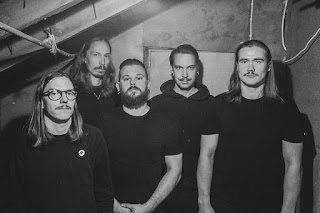


4. I previously commented that your sound does not agree with the more orthodox part of the genre, it seems that somehow the past of the band members, related to hardcore bands above all, has found its way into Qwälen's sound. What influences from bands and styles are present in your sound? Why do you think hardcore plays a fundamental role in defining your sound? How would you describe the sound of your latest album for those who haven't heard it yet?

Ville: I don’t think black metal and hardcore punk are that far away from each other. Both are very raw forms of expression without technical gimmicks and share that “no gods, no masters” attitude. Discovering black metal and a bit later on hardcore as a teenager had a huge impact on me, so I definitely draw a lot on my playing from those days. I don’t consider myself technically a very skillful player, so most of the time I just have to trust on raw power.

Samuli: I guess it comes subconsciously from the past as having punk/hardcore elements was not planned. And I don't really think about it when I write but that side creeps in. I remember sending some demos out years ago to a friend who commented that there is a cool punk vibe with the black metal side as well. I was baffled and dismissed it completely as I could not hear it. Then the album came out and reviewers wrote of us as FINNISH BLACK METAL PUNKS. One becomes rather deaf towards your own sound. Although I don't really listen to punk at home nor have I played in serious punk groups, I've been hanging within the Oulu scene in which people could play any kind of alternative music and still have punk ethos in the center. Or be punk yet not actually play it. I guess it somehow comes from there. 

The new album is raw and intense. It trusts in riffs and sonic power. It nods to the beginning of black metal when there were no rules. The sound attacks the listener relentlessly.


5. Your lyrics are written in Finnish and far from any theme related to satanism, rather you focus on personal issues, at the same time that you openly declare yourself anti-fascist, why do you choose Finnish for your texts? Why do you choose these more mundane themes for the lyrics? Do the lyrics adapt to the music or vice versa? Do you consider it “still necessary” to have to position yourself politically and personally away from all extremism within a scene like black metal?

Samuli: Starting with anti-fascism, we feel it necessary to declare our position as sadly black metal nowadays is a genre in which people silently tolerate and accept questionable thematics. We want to make it known that we are not on the same team with bands that promote symbolism or lyrical themes that deal with national socialism, xenophobia, racist ideologies etc. However, we're not here to start a revolution but rather to state that not everyone is okay with everything. And the whole genre is in a state where sides can not be declared in an easy way. You are either seen as accepting all if you do not state your ground. This is the only way that is clear enough. Black metal is music of honesty and we're honest of our values to others but also to ourselves.

As satanism is not a thing that connects us together as a band, writing solely about it would not be a "true" theme for us. Black metal needs to be honest in all of its forms. Art needs to be honest either consciously or done in a state that taps straight into the subconscious. Still the concept of Satan is meaningful for us yet it does not hold any theistic meaning but is more of a primal rebellious force within. Satan conceptualizes a lot of what is seen as unwanted or negative sides within the human soul. 

The themes chosen are meaningful for us. That is all that has to matter. Black metal has never been a genre that caters to people's expectations or cares what other people think. It has to connect to the artist's reality in a meaningful way. For some it is the occult, some focus on the spirit of nature, some deal with death but all topics are introspective in relation to the artist. All are honest as they should be. Writing about the occult or satanism with no actual real-life connection to the themes would be superficial. 


6. Finland and the Nordic countries have always been standard-bearers when it comes to leading pioneering movements within extreme metal at an international level, why do you think the Nordic countries have excelled in this facet over the years? Do you feel that maybe the scene is saturated and accommodated with respect to the past? Do you think that somehow your music fits better in a scene like the American one where there is a greater diversity of styles and influences?

Samuli: In terms of black metal our music definitely connects more with the scenes in North America. Especially I feel a lot of similarities with the raw USBM scene of the 2010 onward maybe not si much sonically but approach and philosophy-wise. A different kind of variety and diversity of topics exists within that scene. Artists are not confined or made to conform to any specific subject. In the Finnish scene the themes accepted within are rather narrow and to me this feels limiting and contradictory to the original ideas of black metal. Not to even mention the xenophobic and future-frightened thematics that have no connection to the past of the genre in any way.

Finns tend to be stubborn and fixated on what they see as important. I guess that might be one reason why Nordic extreme metal can be seen as standard bearing. Mental world along with the nature around might have something to do with that. I don't really know.


7. Both of your albums have been released through Time to Kill Records. How did you get in contact with them to be able to release the album? Cd, cassette and vinyl, ignoring digital of course, in what format do you feel most comfortable using the time to offer your music to your followers?

Ville: I prefer vinyl myself since you really have to take your time to listen and pay attention to the records, not just have something playing in the background. Also 12” records serve artwork the best since you get it in a nice big picture format.

Samuli: When we had the first album ready with everything, our singer Eetu started sending out emails to different labels and TTK records wanted to release the album. The label has since believed and supported our vision and we are happy working with them.


8. Who designed the album cover, what does it represent and how does it relate to the content of the album?

Ville: All of our graphics are designed by Jussi Pohjanen and he was given the responsibility to design the cover of the second album as well, since we have been really satisfied with the work he has done for us. Both our album covers are scratchboard drawings.

Our singer Eetu sent Jussi the album and the lyrics and he got the idea of ​​the hands rising from the water. Furthermore we asked to add a candle with a black flame and a goblet to the drawing. The black flame is obvious and the goblet is a reference to the Fernet ritual of our live shows. The three symbols on the goblet sum up the essence of Qwälen: against war and fascism, in league with Satan.


9. There isn't much information about the process of recording and mastering the album. Have you taken care of this process yourself or have you received external help from a professional or from a recording studio?

Samuli: No, there really is not much info about that side and it is a conscious choice. We do not really feel the need or point to update from the studio. Very few people and myself included really are interested in what goes on during the production process of bands. Besides when we record, we want to be solely in that mode.

The album was mostly recorded in the Waiting Room recording studio in Tampere two years ago. It was a bit of an accident how we ended up there but we are superbly pleased with everything. We recorded there for three days with the instrument players. Eetu's vocals were recorded in Oulu and I recorded background vocals in the basement of my work place. 

Mikael was our recording and mixing engineer and nowadays we want to focus on playing and delivering the music. When we were younger, there was a rather strong DIY-spirit going on in terms of recording, mixing and mastering partly because we were broke. Now I myself prefer to leave that to people who are more skillful. I also like for the band to be able to concentrate solely on playing and delivering the music. It is quite important to be able to just play and focus on listening to your band members as we like to record live as a whole band. In the past I have recorded instruments separately and it is just not for me. This live mentality is something that differentiates us from a lot of bands within the scene. In Finland I have talked with a lot of people within the metal band scene who just cannot understand why we prefer live recording. Look at bands in the 80s and early 90s as everything was done this way. Band members knew how to play and did not care too much. Bands should play as a band and not as individuals.

Ville: In regards to mastering, I had heard Will’s (Killingsworth) prior work on many Youth Attack releases and those records sound very powerful with a nice cutting edge. I read about his working-concept and thought that this guy might be suitable for us as well, so I suggested that he would do the mastering and others agreed. I think Will got right-away what we were after and absolutely nailed it on the album master! Obviously I also have a lot of respect for him for his work in bands like Orchid and Ampere, which were quite influential to me, so this was a great experience.


10. I suppose that you will compensate yourself this time when it comes to being able to offer concerts with respect to the situation of restrictions that prevailed when you released your first album, how is the live presentation of the album being?

Ville: We don’t come together that often since we’re scattered in different cities, some members are fairly active in other bands and we all have family matters and other duties keeping us busy as well. I don’t see the situation is going to change anytime soon, but that’s fine for us. We’re not super active when it comes to live shows, but the shows we’ve played have been very rewarding. We have a few shows coming up in May, some shows are cooking up for later this year and material from both albums are present on the setlist.

Samuli: Playing live is important for all of us but at the same time I at least do not want to do it too much. It is good to have a little mystique by not playing every weekend somewhere. The few shows that we do play I hope people will come. 

We've got plans to do shows outside of Finland as well, so if any EU promoters want to have us play, get in touch!


11. How were your beginnings in music: first concerts you attended, first albums you bought? What event in your lives pushed you to want to be musicians?

Ville: Megadeth was one of the first concerts I attended, I think I was 13 back then. One of my friends picked up guitar at school around the same time and I think he got me into it also. We took lessons together but we were playing mostly classical back then, I got an electric guitar a bit later. I can hardly remember the first albums I bought, probably some random compilation with Aerosmith on it, later on some Iron Maiden albums and W.A.S.P.’s first album. Classic shit, which I hardly listen to on a daily-basis anymore.

I think going to concerts and watching live-videos had a much greater influence on the idea of playing music than any particular event during my teenage and early adult years. I still don’t consider myself a musician, since this is not a day-job to me, but it sure is a big part of my life.

Samuli: I can't really remember my first concert but properly I started going to shows when I was 19 I guess. That was the early 2000s and among the first ones were Soilwork, Finntroll, Kuolleet Intiaanit (one of the members went on later to form Oranssi Pazuzu) and other Finnish metal bands. During the same time I started playing in bands I also started going to shows and just being involved and seeing ordinary people play music out of joy to play had a pretty big impact on me. 

The first album that I consciously wanted and bought was The fat of the land by The Prodigy. That is still one of my favorites of all time. Then a few that were meaningful in pushing towards my musical track were Ride the lightning by Metallica and Nattföd by Finntroll. I don't really listen to Metallica anymore but Finntroll is still among my favorites in terms of my early musical impacts.

From early childhood I have enjoyed making sounds and the drive for musical creation has always been there. At my grandma's place I gravitated towards the keyboard in her room and always wanted to try the different sounds. I got my sister's super cheap Yamaha keyboard when I was about 9 and I used to put a tape recorder on, put on a drum loop and just bang the keys. Then I wanted to form a band with my friends so we came up with new lyrics to existing songs on the radio and sang those on tape. When I got older, listening to music became a big part in my life. Skateboarding and snowboarding movies had awesome soundtracks and for example you could first hear Slayer, then some obscure punk band and then you would get a Gang Starr track so those exposed a lot of different sides of music to me. At some point around when I was 19, I picked up my brother's guitar and after learning a bunch of easy riffs I started writing my own songs in our garage. Over the years it has grown to be a way for processing my thoughts and emotions. Now it is a part of ny life I would not know how to live without.


12. What album represents for you the essence of black metal? What last albums have you bought?

Ville: If I had to pick just one that would be Craft’s “Total Soul Rape” or Beherit’s “Drawing Down the Moon”. I think the last albums I bought were Sonic Poison’s “Eruption”, “Cries the Mocking Mother Nature” and Public Acid’s “The Beat Sessions” tape, absolute killer stuff. In addition I just copped a reissue of Koro’s first EP and Kriegshög’s 2016 EP.

Samuli: To me Behexen's "The poisonous path" is the most important black metal album. Rather clear sounding record and not so blown out as BM albums usually are but still risky and attacking. Other albums that come close are Darkthrone's "Under a funeral moon" and Gorgoroth's "Ad majorem Satanae gloriam".

The last albums that I bought were Lamp of Murmuur's "Submission and slavery", Daeva's "Through sheer will and black magic" and Entombed's "Left hand path". ETERNAL HAILS LG PETROV.


13. Thank you very much for taking the time to answer these questions for Black Metal Spirit, if you want to add something for Qwälen fans this is the place. I hope the questions are to your liking.

Samuli: Thank you for good questions! It was a pleasure. HAIL SATAN.


-----------------------------------------------------------------------------------------------------------------------------

Saqraruna - An Altar to the Nameless Entity 5,99 €


Edición en cassette blanco, limitada a 16 copias del primer Ep de esta banda peruana de black atmosférico